16 November 2026
Gutter Cleaning Hackettstown: Protecting Your Home From Seasonal Debris
Presented by @rivergkkg875

Hackettstown homeowners deal with a little bit of everything. Mature trees, windy fall weather, spring downpours, winter freeze and thaw cycles, and the occasional storm that drops more debris in one afternoon than a whole week usually brings. All of that ends up in one place sooner or later, your gutters.
People tend to think of gutters as a background system, something attached to the roofline that only matters when water starts pouring over the side. By that point, the problem has usually been building for months. A clogged gutter does not just look untidy. It changes the way water moves around a house, and water is patient. It finds seams, fascia edges, foundation cracks, basement walls, and low spots in landscaping. Given enough time, it also finds your wallet.
That is why Gutter Cleaning Hackettstown is not a cosmetic service. It is routine home protection. In a town with four true seasons and plenty of leafy neighborhoods, regular cleaning helps preserve roofing materials, siding, trim, walkways, and foundations. It also helps you avoid the kinds of small problems that quietly turn into major repairs.
Why seasonal debris is harder on gutters than most homeowners realize
A lot of homeowners picture gutters filling with dry leaves in autumn. That certainly happens, but leaves are only part of the story. In practice, gutters collect a mix of materials that behave differently depending on the season. Oak leaves mat down tightly and trap water. Pine needles knit together and catch grit. Seed pods and twigs create little dams at elbows and downspout openings. Roof granules from asphalt shingles settle into the trough and make a muddy paste. Add pollen in spring, storm debris in summer, and ice in winter, and the system can clog in ways that are not obvious from the ground.
Hackettstown’s seasonal shifts make this worse. A gutter may look only half full in late fall, but if the downspout outlet is blocked, that half-full gutter can already be failing. Then winter arrives. Standing water freezes, expands, and adds weight. Fasteners loosen. Seams strain. Water backs up under the lower edge of the roof. When temperatures rise again, all that trapped meltwater has to go somewhere.
I have seen gutters that appeared to need a simple scoop-and-rinse end up revealing rotted fascia behind them. I have also seen homes with relatively new gutter systems suffer avoidable foundation washout because one buried downspout extension was packed with debris for an entire season. The damage does not always announce itself dramatically. Often it starts with staining, damp mulch beds, or a narrow trench in the soil under a roof edge.
The local patterns that make Hackettstown homes vulnerable
Not every town creates the same gutter problems. In Hackettstown, the tree canopy is a major factor. Neighborhoods with older maples, oaks, and pines naturally see heavier debris loads than newer developments with sparse landscaping. Homes near wooded lots or at the edge of a property line often collect debris from neighboring trees as well as their own.
Roof design matters too. A simple ranch with short gutter runs is one thing. A two-story colonial with multiple valleys, dormers, and intersecting roof planes is another. Valleys channel a surprising amount of water and debris into concentrated spots. If the downspouts on those runs are undersized, or if one outlet is partially blocked, overflow becomes much more likely in heavy rain.
Pitch and sun exposure also affect what builds up. North-facing runs tend to stay damp longer. That means decomposing leaf matter does not dry out as quickly, and moss or algae can develop near the roof edge. South-facing sections dry faster, but they can bake debris into a stubborn layer that does not flush out easily. Gutters under overhanging branches usually need more frequent attention than runs exposed to open sky.
Then there is winter. In northwestern New Jersey, one freeze-thaw cycle after another can turn a minor clog into a structural headache. If meltwater cannot move freely, it pools and refreezes. That extra weight may not tear a gutter off overnight, but season after season it can distort pitch, loosen spikes or hangers, and open joints that used to be watertight.
What clogged gutters actually do to a house
When gutters stop moving water efficiently, the visible symptom is usually overflow. The less visible effects are the ones that cost more.
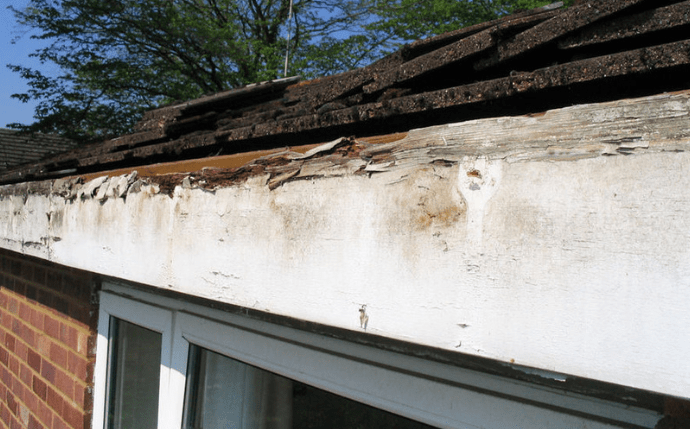
Overflow at the roofline often soaks the fascia and the back side of the gutter board. Wood stays wet, paint blisters, and rot sets in. If the drip edge installation was never ideal, backed-up water can creep under shingles and affect the roof decking. That does not mean every clog leads to roof leaks, but it does raise the risk, especially at corners and valleys.
Lower on the house, constant overflow can stain siding and encourage mildew growth on shaded walls. Brick and masonry are durable, but they are not immune to repeated saturation. Mortar joints weather faster when they stay wet. Wooden trim and window casings can swell, peel, and soften.
At ground level, poor drainage can hollow out mulch beds, wash channels through topsoil, and create muddy splashback against the foundation. If enough roof water concentrates near one area of the home, basement moisture becomes more likely. Not every damp basement starts at the gutter line, but clogged gutters and short discharge points are common contributors.
Walkways deserve attention too. If a front gutter spills near an entry, water can pool and create slippery conditions in cold weather. I have seen this happen on front stoops where homeowners thought they had an isolated icing issue, when the actual problem was a blocked downspout feeding water right where people step.
The signs that your gutters need cleaning sooner than you planned
Some gutter problems are obvious. Others are easy to miss until they have progressed. If you stand outside during a solid rain, your house often tells you what is working and what is not. Water should enter the gutter, travel smoothly, and exit through downspouts without spilling over the front lip or pouring from seams.
Watch for these common warning signs:
- Water spilling over the sides during rain
- Sagging sections or gutters pulling away from the fascia
- Plants or weeds growing in the gutter trough
- Dark streaks on siding beneath the gutter line
- Pooled water near the foundation after a storm
Even one of these signs is enough to justify a closer look. Sagging, in particular, means the debris load may be heavy, the hangers may be stressed, or both. Gutters are designed to carry moving water, not wet compost.
There are also quieter indicators. You may notice birds pecking into a section repeatedly, which can mean insects or organic buildup are present. You may hear a distinct dripping after rain has stopped, suggesting standing water trapped in a low section. In winter, thick icicles along one gutter run but not another can hint at drainage differences caused by hidden blockage.
How often gutters in Hackettstown usually need attention
There is no honest one-size-fits-all schedule. Some homes can get by with cleaning twice a year. Others need more frequent service because of tree density, roof complexity, or recurring storm exposure.
For many Hackettstown properties, a spring cleaning and a late fall cleaning form a solid baseline. Spring service clears seed pods, twigs, pollen sludge, and anything winter left behind. Late fall service handles the heaviest leaf drop before freezing weather settles in. Homes surrounded by pine trees, or homes with multiple overhanging canopies, may benefit from a mid-season check as well.
The trick is to match the schedule to the property rather than to a calendar alone. A house with open exposure and minimal nearby foliage will not load up like a house tucked under mature oaks. I have seen two homes on the same street need completely different maintenance intervals just because one lot had taller trees and a more complicated roofline.
A good rule is to reassess after unusual weather. One strong windstorm can fill valleys and downspout strainers with debris. If your area has just had a series of heavy rains, it is worth checking whether the system is still draining properly, even if your next regular cleaning is weeks away.
Why DIY gutter cleaning is not always the bargain it seems
Homeowners who are comfortable on ladders sometimes prefer to handle gutter cleaning themselves. For a low, simple home with easy access, that can be reasonable. The work itself is straightforward in theory, remove debris, flush the system, check flow, and make sure downspouts discharge properly. The challenge is that real roofs and real ladders are not theoretical.
Two-story homes, uneven grading, landscaping beds, decks, and wet conditions all complicate ladder work. So do buried drain connections, steep roof pitches, and wasp nests hidden under leaf mats. The risk is not just falling. It is also damaging the gutter by leaning the ladder improperly, stepping on a hidden extension, or missing a downspout obstruction that keeps the system from working even after the trough looks clean.
Another issue is thoroughness. A homeowner may clear visible debris but leave compacted material at the outlet or fail to test whether the entire downspout run is open. That matters. A gutter can look clean from above and still overflow because the clog sits lower in the system. In some cases the downspout blockage has to be dislodged from the bottom or broken apart section by section.
Then there is time. What starts as a Saturday morning task often becomes a half-day project once setup, cleanup, bagging debris, and repeated ladder moves are included. For many homeowners, especially on larger homes, professional service becomes less about convenience and more about efficiency and risk reduction.
What a proper professional cleaning should include
Not all gutter cleaning is equal. A quick pass that removes leaves from visible sections is not the same thing as a complete service. A proper visit should address both the troughs and the drainage path. The goal is not to make the gutter look cleaner. It is to restore water flow and spot developing issues before they worsen.
A thorough service typically includes:
- Removal of leaves, twigs, and compacted sediment from the gutters
- Clearing and testing of downspouts for full drainage
- Basic inspection of seams, pitch, hangers, and visible fascia condition
- Cleanup of debris from walkways, beds, and work areas
- Notes on any repairs or problem areas that need follow-up
That inspection piece matters. Many problems reveal themselves only when someone is up close. You can often see minor seam separation, rusting at fasteners, standing water in a low section, or splash marks that show where overflow has been happening. Catching those signs early can prevent a routine cleaning from turning into a repair emergency later.
The role of gutter guards, and where they help or disappoint
Gutter guards are often marketed as a permanent answer, but they are better understood as a maintenance reducer, not a maintenance eliminator. On some Hackettstown homes, guards are worthwhile. On others, they solve one problem while creating another.
Mesh-style guards can be effective against larger leaf debris, especially on homes with broadleaf trees. They can reduce how much material enters the gutter and make cleanings faster. But very fine debris, like roof grit, pollen residue, or small seed particles, can still accumulate over time. Pine needles can be especially troublesome depending on guard design. They may collect on top, bridge across openings, or wash into the system in smaller fragments.
Surface-tension products have their own trade-offs. They can work when installed precisely, but they are more sensitive to pitch and water volume. In intense rain, some systems overshoot if conditions are not ideal. They also do not eliminate the need for inspection. I have seen guarded systems where the gutter itself stayed relatively clean while the downspout exit quietly plugged with shingle granules and sludge.
For homeowners considering guards, the decision should be based on tree type, roof geometry, budget, and realistic expectations. They can reduce labor and frequency, but they are not a set-it-and-forget-it upgrade.
Seasonal timing matters more than people think
A lot of damage comes from cleaning at the wrong time rather than not cleaning at all. If a homeowner cleans too early in the fall, then gets several more weeks of leaf drop, the gutters can be nearly full again before winter. Clean too late, after repeated freezing nights, and the debris may already be matted into icy sludge that is harder to remove and has already held water in place.
Spring has its own timing issues. Early spring cleaning is useful for clearing winter leftovers and restoring flow before heavy rain season. But properties with lots of seed pods, blossoms, or helicopter seeds may need a later touch-up. Some of the worst spring clogs come not from leaves but from sticky organic buildup mixed with roof granules.
Summer is often overlooked, yet it can be the best time to catch developing problems. During dry periods, professionals can inspect pitch, hanger integrity, and seam condition more easily. Storm season also exposes weaknesses. If one section repeatedly overflows during summer thunderstorms, there may be a design or capacity issue rather than just a cleaning issue.
Small repairs that often show up during cleaning
Cleaning and repair tend to overlap. Once debris is out of the way, certain flaws become much easier to spot. A common one is poor pitch. Gutters need a subtle slope toward the downspout. Too little slope leaves standing water. Too much can look awkward and reduce capacity at one end. Settling, loose hangers, or previous installation shortcuts can all affect pitch over time.
Loose fasteners are another frequent issue. Older spike-and-ferrule systems can work loose after years of expansion, contraction, and weight stress. Hidden hangers generally perform better, but they also need occasional replacement. If a section is already sagging, simply cleaning it without addressing support hardware only postpones the problem.
Seam leaks, corner leaks, and outlet leaks are also common. These may show up as staining, drips after rain, or damp fascia in isolated spots. Sealants do not last forever, especially where water stands. Aluminum gutters can https://andredzuq342.dovetailscope.com/posts/diy-vs-professional-gutter-cleaning-in-hackettstown often be repaired effectively if the issue is caught early. If corrosion or warping is advanced, replacement of a section may make more sense than repeated patching.
Downspout discharge is sometimes the forgotten half of the system. Even perfectly clean gutters cannot protect a home if the water empties too close to the foundation. Extensions, splash blocks, or underground drains need to carry water away and stay open. When they fail, homeowners sometimes blame the gutter itself even though the real issue starts at the outlet.
Choosing a service with the right mindset
When homeowners search for Gutter Cleaning Hackettstown, it is easy to focus only on price. Cost matters, of course, but so does the scope of the work. A lower quote may reflect a very basic debris removal with little attention to downspouts, testing, or condition reporting. A more complete service usually saves money over time because it identifies issues before they become repairs.
Look for a company that understands local conditions and can explain what they are seeing on your specific property. The right provider will talk plainly about debris type, problem areas, likely cleaning frequency, and whether any sections show wear. They should also be realistic. If a system is old, undersized, or incorrectly sloped, no honest professional should pretend that cleaning alone will solve every overflow event.
Insurance, ladder safety, and cleanup standards matter too. So does communication. Homeowners should know whether debris is bagged and removed, whether downspouts are tested, and whether photos or notes will be provided when problem areas are found. Those details tell you whether the company treats gutter cleaning as a real property maintenance service or just a quick seasonal chore.
A clean gutter system protects more than the roofline
The best way to think about gutter maintenance is as water management, not leaf removal. A clean, functioning system protects the outer shell of the house, the soil around it, the paths that lead to it, and in many cases the basement beneath it. That is a wide range of protection from a relatively modest service.
Homes in Hackettstown face changing conditions month by month. Autumn loads the gutters. Winter tests them. Spring exposes whether they can still drain. Summer storms reveal hidden weak points. Staying ahead of that cycle is far easier than reacting after overflow has already caused staining, rot, or washout.
Well-maintained gutters rarely get much praise because they do their job quietly. Water comes off the roof, disappears into the system, and exits away from the home with no drama. That silence is exactly what you want. It means the house is shedding weather the way it was designed to, and that one of the simplest systems on the property is doing some of the most important work.
Just Gutters LLC
Address: 262 Main St, Hackettstown, NJ 07840
Phone number: +12013319454
FAQ About Gutter Cleaning Hackettstown
How much should a gutter clean cost?
Professional gutter cleaning typically costs between $163 and $333, with a national average of around $210 to $250 for a standard-sized home.
What months should you clean gutters?
You should clean your gutters twice a year—once in late autumn (November to December) and once in late spring (April to May).
Is it worth paying for gutter cleaning?
Yes, paying for gutter cleaning is worth it because it prevents thousands of dollars in water damage, roof leaks, and structural repairs.